
AI and Nuclear:
Powering Malaysia's Digital Future
eCEOs Nuclear, July 2026
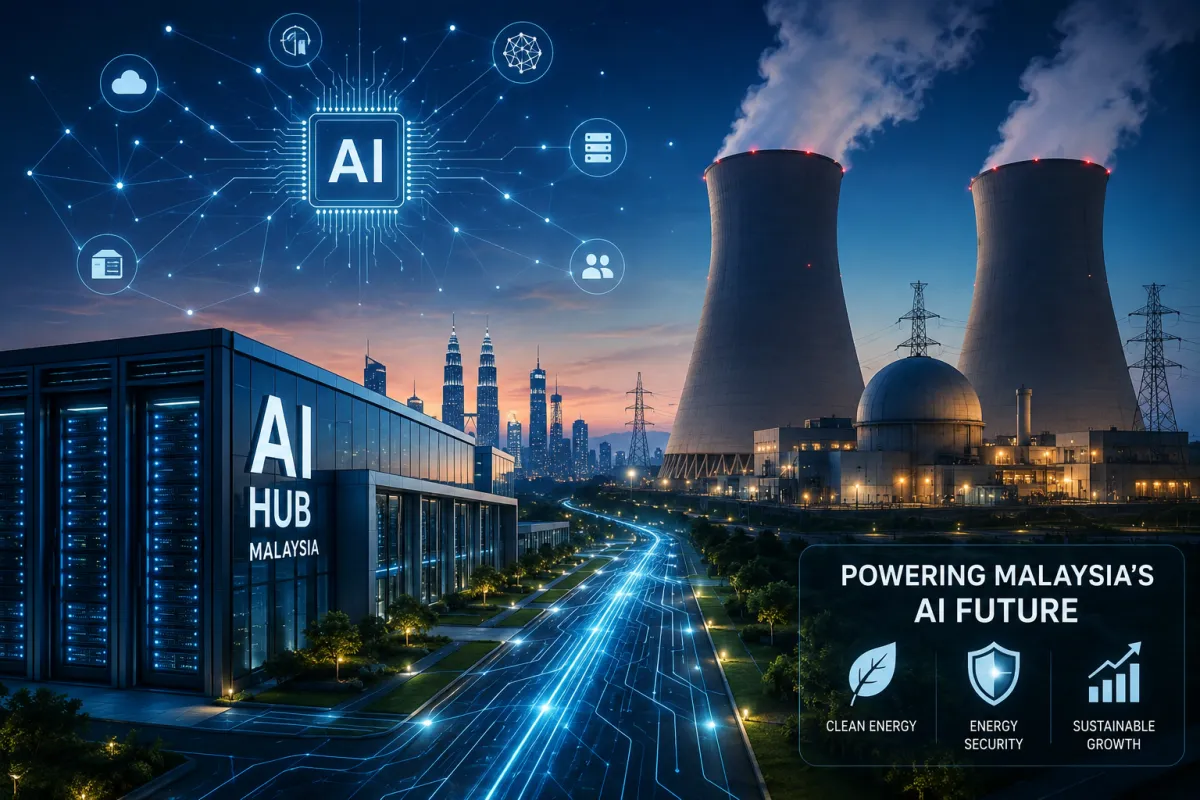
Malaysia's ambition to become an artificial intelligence (AI) hub will require a new generation of reliable electricity. As AI, cloud computing, and digital technologies continue to expand, the country's energy infrastructure must evolve to support this transformation. While renewable energy will play a significant role, nuclear energy is one of the options that deserves serious consideration alongside renewables, energy storage, and grid modernisation.
In recent years, Malaysia has witnessed a surge in data centre investments. The country has rapidly emerged as one of Asia's preferred destinations for hyperscale data centres due to its strategic location, competitive electricity prices, improving digital infrastructure, and supportive investment policies. Global technology companies such as Microsoft, Google, Amazon Web Services (AWS), and Oracle have announced major investments to expand their cloud and AI infrastructure in Malaysia[1].
Unlike conventional commercial buildings, data centres operate 24 hours a day, 365 days a year, requiring a continuous and reliable electricity supply to support cloud services, AI model training, and digital operations. According to the Data Center Map directory, Malaysia currently hosts for 125[2] operational data centres, with many more under development, particularly in Johor and the Klang Valley.
During a Bernama TV interview Energy & AI: Malaysia's Nuclear Moment | The Nation, Ms. Nik Nor Zafira, Senior Manager of Capital Projects & Infrastructure Advisory at PwC Malaysia, highlighted that Malaysia's aspiration to become an AI-powered economy will inevitably increase electricity demand[3]. As AI adoption grows, so too will the need for reliable and continuous power to support data centres and digital infrastructure.
This trend is already becoming evident. According to Tenaga Nasional Berhad (TNB), the company received 74 electricity supply applications from data centre operators, representing a combined maximum demand of more than 11,000 MW (MIDA, 2024)[4], equivalent to approximately 40% of Peninsular Malaysia's installed generation capacity. The increasing demand is already being reflected in Malaysia's power sector. In 2024, TNB commissioned 18 new data centres under its Green Lane Pathway[5], adding approximately 1.9 GW of electricity demand and contributing to a 6.5% increase in electricity sales compared with the previous year. While the current reserve margin remains sufficient, continued investment in generation capacity, grid infrastructure, and new energy sources will be necessary to support future growth.
Nuclear power plants provide continuous, 24/7 low-carbon electricity, making them well suited to support electricity-intensive facilities such as AI data centres. Unlike solar and wind, nuclear generation is not affected by weather conditions, allowing it to provide stable baseload power throughout the year. Recognising this need, several global technology companies are already exploring advanced nuclear technologies, including Small Modular Reactors (SMRs), to support the growing energy requirements of AI infrastructure.
The discussion, however, should not be framed as renewables versus nuclear. Instead, Malaysia's future electricity system will require a balanced energy mix. Renewable energy should continue expanding, supported by battery storage, grid modernisation, and cleaner transition fuels. Nuclear energy can complement these technologies by providing reliable, large-scale, low-carbon electricity that strengthens energy security while supporting the country's long-term climate commitments.
As Malaysia continues its journey towards becoming a regional AI and digital hub, the conversation extends beyond digital infrastructure, it is also about building the energy system capable of supporting it. With electricity demand from data centres expected to continue rising over the next decade, ensuring a secure, reliable, and low-carbon power supply will become increasingly important. Nuclear energy is not the only solution, but as part of a diversified energy mix, it offers one of the few technologies capable of providing large-scale, continuous, low-carbon electricity to support Malaysia's long-term digital and economic ambitions.
References:
[1] https://theedgemalaysia.com/node/734512
[2] https://www.datacentermap.com/malaysia/
[3]https://www.youtube.com/watch?v=ZXWApHhcx1E
[4]https://www.nst.com.my/business/corporate/2024/04/1039043/data-centres-ai-initiatives-boost-electricity-demand-lift-tnbs
[5]https://www.tnb.com.my/assets/annual_report/TNB_IAR_2024.pdf
Ready to Deliver Your Strategic Initiative?
Where you are transforming your enterprise, building energy capability or delivering national-scale programmes - The eCEOs delivers.
Delivering transformation with expertise in project excellence, digital solutions, energy and nuclear advisory


© 2026 eCEOs. All Rights Reserved
Company
Locations
Kuala Lumpur HQ
2B-05-02, Block 2B,
Plaza Sentral,
Jalan Stesen Sentral 5,
50470 Kuala Lumpur,
MALAYSIA
+60 327735665
+60 327735668
Indonesia | Singapore | India