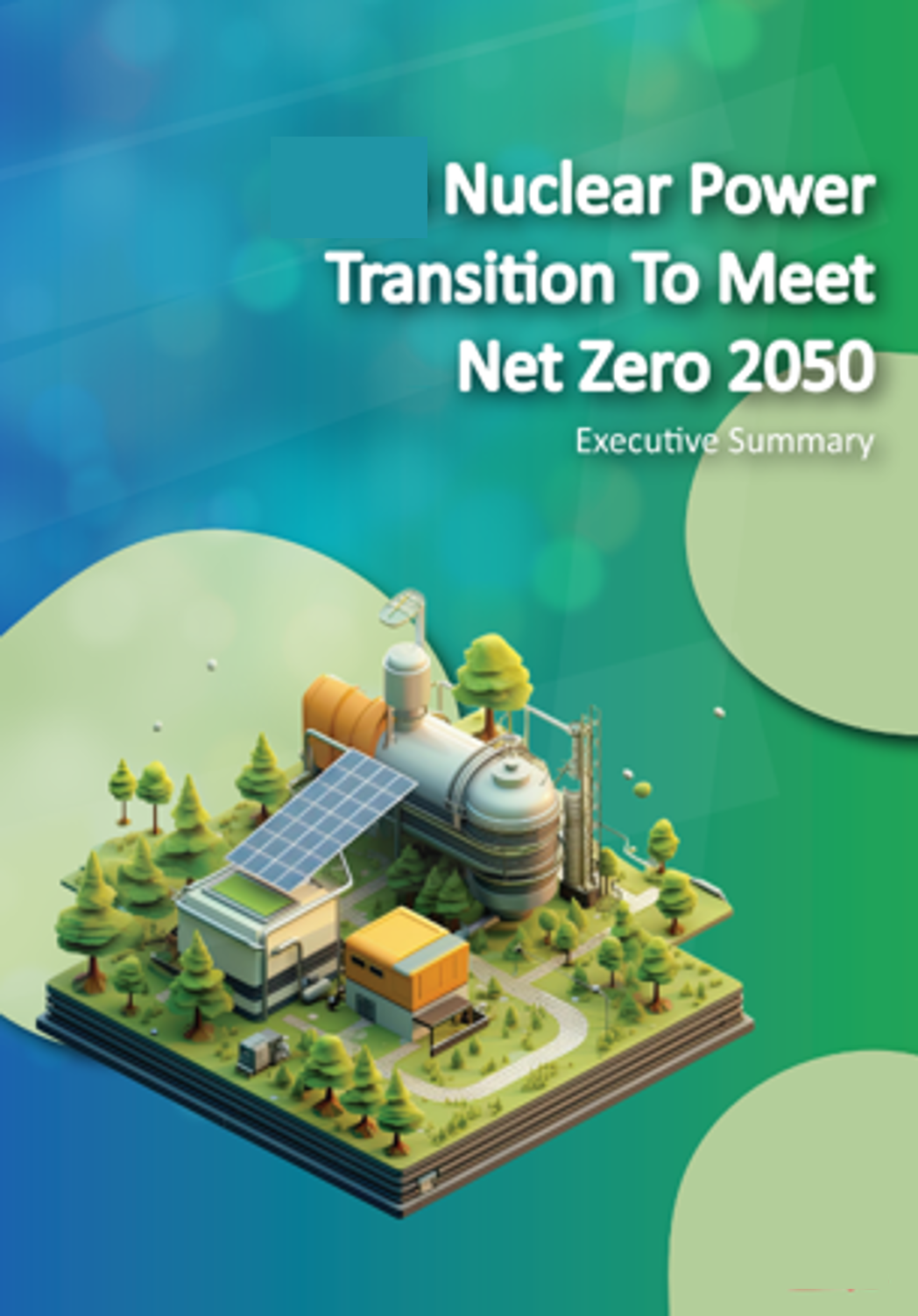

Nuclear Services
At our Nuclear Division, we are committed to advancing the development of nuclear energy initiatives in Malaysia through strategic collaboration, industry advocacy, and project development expertise. While we do not directly own proprietary nuclear technology, The eCEOs has established strong relationships with both local and international nuclear stakeholders, positioning us as an integral advocate within the nuclear power ecosystem. We combine industry insight, stakeholder engagement, and project management capabilities to support the growth of safe, sustainable, and future-ready nuclear energy solutions. Our commitment is centered on fostering innovation, strengthening industry partnerships, and contributing to the nation’s long-term energy transition objectives.
With our deep understanding of the nuclear industry and our commitment to excellence, we are well-positioned to guide clients through the complexities of nuclear project management, delivering successful outcomes that exceed expectations.
Capability Building
eCEOs continues to strengthen its presence within the nuclear and energy industry by actively engaging with technology providers, government stakeholders, industry experts, and media platforms. Through collaborative discussions, technical exchanges, conferences, and public engagements, eCEOs supports the development of strategic partnerships, promotes industry awareness, and contributes to ongoing conversations surrounding nuclear energy, innovation, and sustainable energy development.
Engagement Collaboration
Advocacy Efforts
Media Outreach
Sabar Md Hashim brings over 36 years of experience across Malaysia’s energy sector and government institutions, including senior leadership roles in Tenaga Nasional Berhad and the Ministry of Economy Malaysia. His expertise spans national energy planning, policy development, strategic research, and multilateral cooperation, with particular focus on energy security, sustainability, and nuclear energy.
Throughout his career, he contributed to key national initiatives involving power systems, economic planning, and cross-border energy collaboration, while actively participating in international conferences and industry discussions related to energy and nuclear non-proliferation.
Prof. Emeritus Marzuki has held numerous senior leadership positions at Universiti Kebangsaan Malaysia, including Deputy Vice Chancellor for Academics and Internationalization, Pro Deputy Chancellor for Strategy and Corporate Development, Chairman of UKM Pakarunding Sdn Bhd, and Dean of Faculty of Engineering and Built Environment . Experienced in bringing extensive expertise in strategic planning, environmental management, and engineering consultancy. His professional experience spans environmental impact assessment, air quality modelling, energy and petrochemical infrastructure development, and international environmental negotiations. Throughout his career, he has contributed to major industrial and power generation projects in collaboration with global companies and government agencies, while playing a key role in advancing strategic transformation initiatives within Malaysia’s higher education and energy sectors.
Y.M. Raja Dato’ Dr. Abdul Aziz serves as Principal Advisor at ECEOS and brings over 30 years of experience in nuclear regulation, safety, security, and international cooperation. He previously served as Director at the International Atomic Energy Agency (IAEA) in Vienna and as Director General of Malaysia’s Atomic Energy Licensing Board, where he oversaw the safe regulation of nuclear activities and the rare earth industry in Malaysia.
Recognised for his expertise in nuclear governance, non-proliferation, radioactive waste management, and peaceful nuclear technology, he continues to contribute to the advancement of the nuclear industry through advisory roles, strategic engagements, and international collaboration.
Y.M. Raja Dato’ Dr. Abdul Aziz is Principal Advisor at ECEOS with over 30 years of experience in nuclear regulation, safety, security, and international cooperation. He previously held senior roles at the IAEA in Vienna and Malaysia’s Atomic Energy Licensing Board, overseeing nuclear and rare earth industry regulation. He continues to support the nuclear industry through advisory work, strategic engagement, and international collaboration.
Prof. Emeritus Marzuki has held numerous senior leadership positions at Universiti Kebangsaan Malaysia, including Deputy Vice Chancellor for Academics and Internationalization, Pro Deputy Chancellor for Strategy and Corporate Development, Chairman of UKM Pakarunding Sdn Bhd, and Dean of Faculty of Engineering and Built Environment . Experienced in bringing extensive expertise in strategic planning, environmental management, and engineering consultancy. His professional experience spans environmental impact assessment, air quality modelling, energy and petrochemical infrastructure development, and international environmental negotiations. Throughout his career, he has contributed to major industrial and power generation projects in collaboration with global companies and government agencies, while playing a key role in advancing strategic transformation initiatives within Malaysia’s higher education and energy sectors.
Sabar Md Hashim has over 36 years of experience in Malaysia’s energy sector and government institutions, including senior roles at Tenaga Nasional Berhad and the Ministry of Economy Malaysia. His expertise covers energy planning, policy development, strategic research, energy security, sustainability, and nuclear energy. He has contributed to national power and economic planning initiatives, cross-border energy collaboration, and international energy and nuclear non-proliferation discussions.
eCEOs has contributed to Malaysia’s early nuclear power planning through a comprehensive pre-feasibility study covering the strategic, technical, regulatory, commercial, and organisational dimensions of nuclear energy implementation. The engagement explored how nuclear power could support long-term energy security, grid reliability, and net-zero objectives. The study also examined potential reactor technologies, implementation pathways, programme governance, regulatory readiness, siting considerations, delivery models, workforce development, local supply chain participation, stakeholder engagement, and preliminary economic impact. This track record provides eCEOs with a strong foundation to support future nuclear initiatives, especially in programme orchestration, PMO advisory, capability building, stakeholder alignment, and implementation readiness.